FLOW-CC

Low-energy Direct Air Capture for windy coastal desert corridors

Flow-CC 2.0 is developing a modular Direct Air Capture architecture that combines passive / low-assist airflow, K2CO3 + glycine chemistry, seawater air preconditioning, staged falling-film absorption and low-temperature regeneration to validate a pathway toward verified sub-$100/t atmospheric CO₂ removal at scale.

Early-stage technical validation / TRL 2–3. Next milestone: 1–5 m² integrated validation rig.

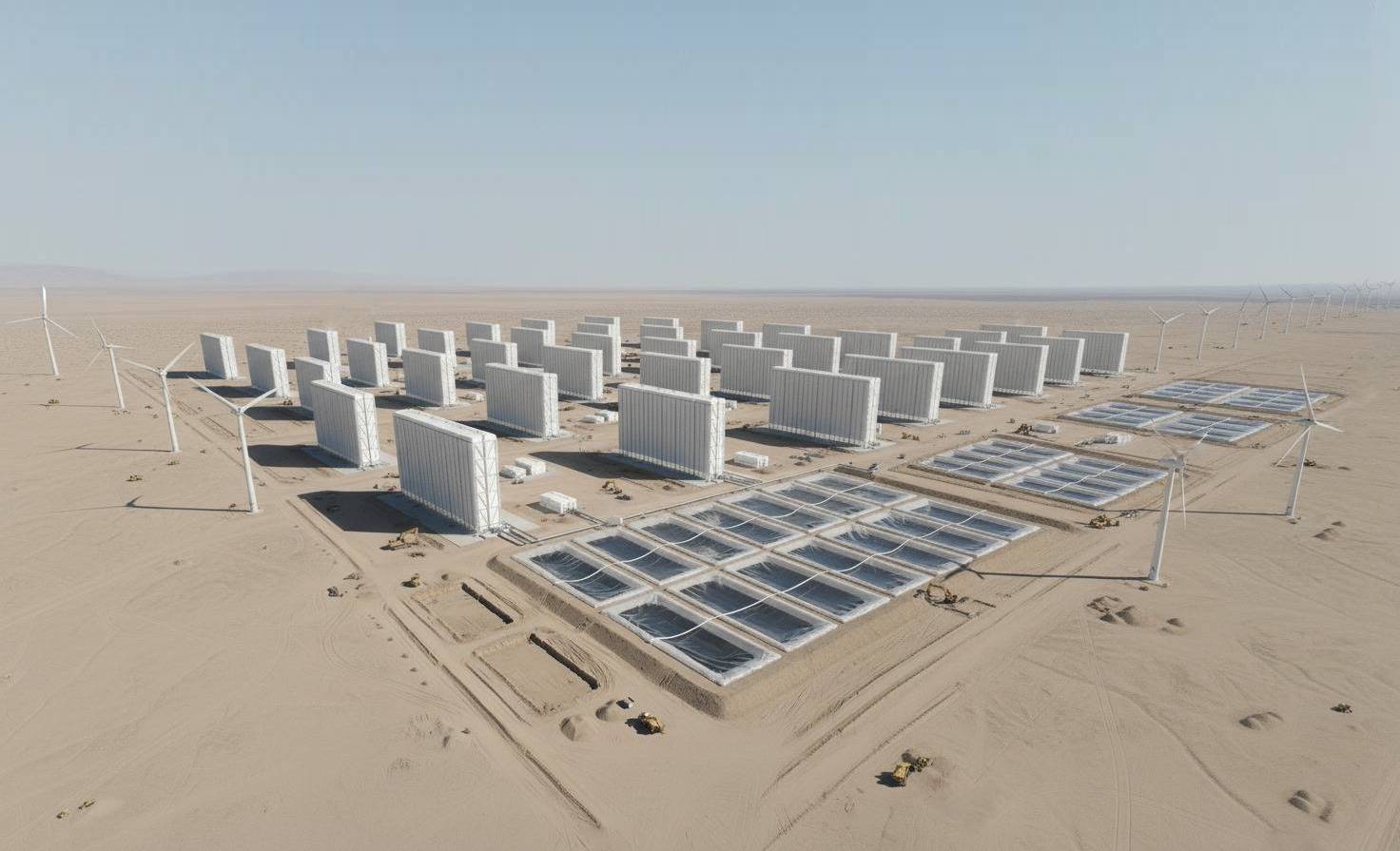
Solar regeneration field concept
The problem

Cutting emissions isn’t enough —
we must also remove CO₂ already in the air.

DAC today is slowed by high heat needs, large fans, complex plants, and land/energy friction, resulting in costs of $300–800/t. To unlock mass buyers and public programs, we need sub-$100/t.

Our universal platform

Flow-CC 2.0 — a low-energy DAC architecture

Flow-CC 2.0 combines passive / low-assist airflow, K2CO3 + glycine/glycinate solvent, a six-stage cascade falling-film absorber, seawater air preconditioning and low-temperature regeneration.

Passive Airflow

Ambient wind corridors provide the primary air movement, with low-assist airflow only where pressure drop or site conditions require it.

K2CO3 + Glycine Solvent

A promoted potassium carbonate solvent improves absorption kinetics while avoiding very aggressive KOH/NaOH open-contact chemistry.

Cascade Absorber

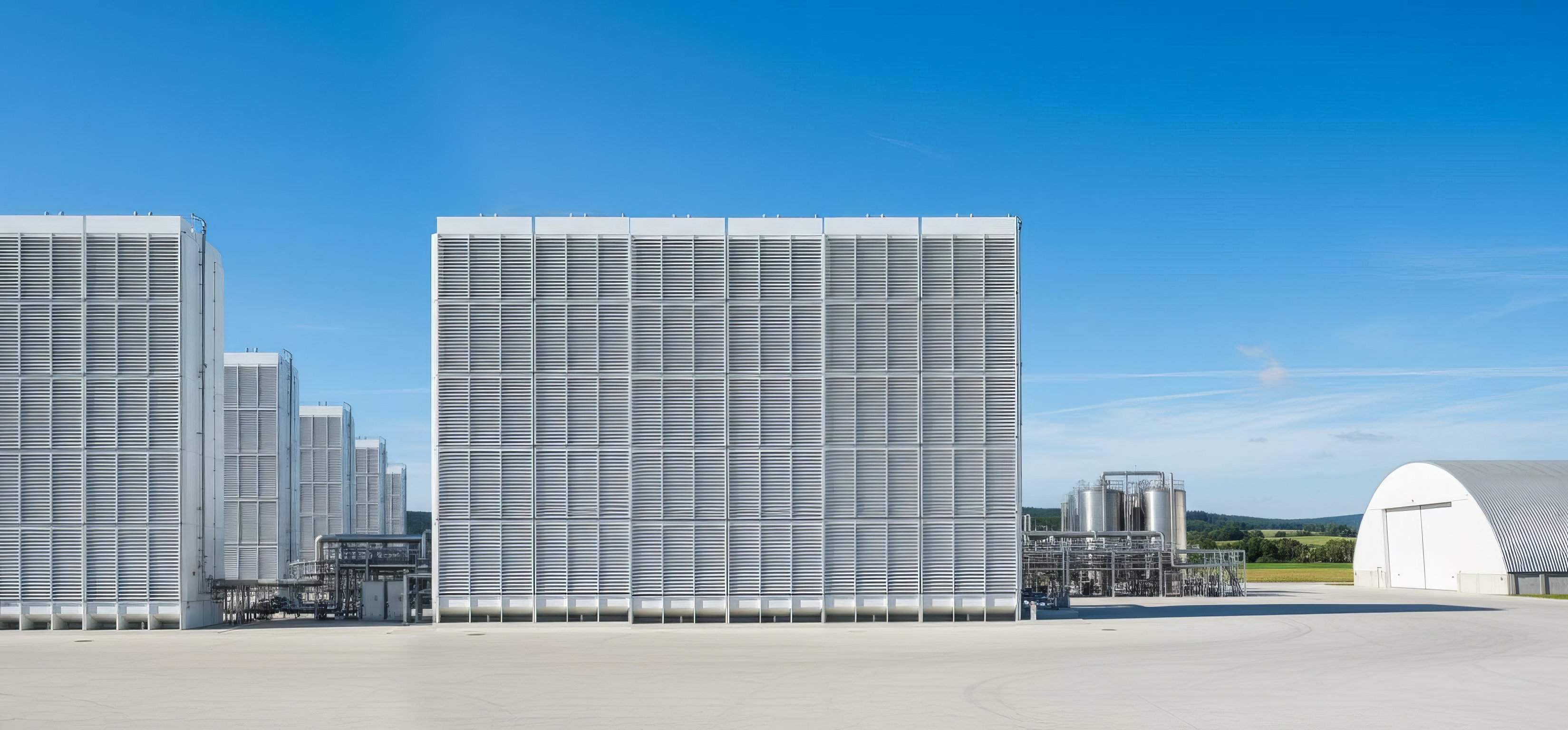
Seawater preconditioning cools and humidifies incoming air before a six-stage falling-film absorber captures CO₂ for low-temperature regeneration.

Field layout view
Close-up of inflated solar packet
Why low-temperature regeneration

A practical pathway toward verified sub-$100/t removal.

Low-temperature regeneration is the first validation route, initially solar-assisted and later open to heat integration. The goal is to measure capture flux, water balance, pressure drop, salt carryover and solvent stability before scaling.

Stage TRL 2–3 technical validation • 1–5 m² integrated rig

Validation-first

Prove or kill the coupled physics quickly.

Airflow & Contact

What to prove: pressure drop, passive / low-assist airflow envelope, real wetted area and falling-film stability.

Why it matters: capture flux only matters if the absorber can move enough air without fan-heavy OPEX.

Seawater Interface

What to prove: air preconditioning benefit, water balance, salt carryover envelope and materials compatibility.

Why it matters: coastal desert deployment needs humidity control without turning freshwater into the hidden cost driver.

Regeneration & CO₂ Quality

What to prove: K2CO3 + glycine/glycinate stability, low-temperature regeneration energy and CO₂ output quality.

Why it matters: the sub-$100/t pathway depends on measured thermal OPEX, not early spreadsheet confidence.

Flow-CC validation pathway concept
Site physics as technology

Wind, seawater and heat integration are part of the architecture.

Flow-CC 2.0 is designed for coastal desert corridors where stable wind, seawater access, high solar resource and land availability can work together instead of being treated as separate deployment constraints.

  • Wind corridor: ambient airflow as the primary air mover
  • Seawater access: preconditioning route for hot, dry air
  • Solar / waste heat: low-temperature regeneration pathway
  • CO₂ handling: storage, utilization or future Power-to-Gas optionality
Unit economics

Why a pathway to below $100/t is plausible

Directional Economics Logic

Flow-CC 2.0 is not claiming mature commercial economics today. The cost target is a design constraint: validate the physics first, then update TEA from measured rig and pilot data.

Primary cost-down levers

  • Air movement: passive / low-assist airflow
  • Water balance: seawater air preconditioning
  • Contacting: staged cascade falling-film absorber
  • Heat: low-temperature regeneration
  • Validation: 1–5 m² rig before scale claims

Cost pathway checkpoints

Reduce energy loads: passive airflow targets fan power while low-temperature regeneration targets thermal OPEX.

Control the water penalty: seawater preconditioning must show humidity benefit without unacceptable salt carryover.

Validate contact efficiency: the rig must measure capture flux per wetted area under real pressure-drop limits.

Update TEA from evidence: measured rig and outdoor pilot data define whether the pathway can move toward verified sub-$100/t economics.

Market Opportunity

The market is growing fast.

Buyers want high-quality, durable CO₂ removal with clear measurement. If verified below $100/t, DAC can move beyond premium buyers toward infrastructure-scale climate markets.

Global Need

~0.5–1.5 Gt CO₂/yr of removal is needed by 2030, and ~5–10 Gt/yr by 2050 (IPCC & IEA).

Market Size

At $100–200 per ton, this implies a market of ~$50–300B/yr by 2030 and ~$0.5–2.0T/yr by 2050.

Current DAC Price

High-quality, durable DAC credits are sold today for $200–$600 per ton, mainly to corporate buyers.

R&D and pilot partners

What Flow-CC needs next

Lab & Prototype Support

Solvent testing, seawater aerosol control, sensors, automation and fabrication support for the 1–5 m² integrated validation rig.

Process Engineering Mentors

Expert review across gas-liquid contact, passive airflow, low-temperature regeneration, materials compatibility and measurement design.

Strategic Pilot Partners

Infrastructure, energy, coastal industrial and climate partners interested in moving from measured proof-of-concept to outdoor pilot readiness.

Roadmap

From TRL 2–3 validation to pilot-ready engineering

TRL 2–3: Architecture Defined

The system concept is coherent, but the critical coupled physics have not yet been demonstrated in one integrated rig.

Next: 1–5 m² Validation Rig

Measure CO₂ capture flux, water balance, pressure drop, salt carryover, film stability, solvent degradation and regeneration behavior.

After Validation: Outdoor Pilot

Prepare a 10–50 m² outdoor module, updated TEA, pilot budget, IP scope and partner package. Future Power-to-Gas integration remains strategic optionality after DAC validation.

Get in touch

Partner on low-energy DAC validation.

If you want to invest, support the validation rig, provide technical mentorship or explore a future pilot partnership - contact us.